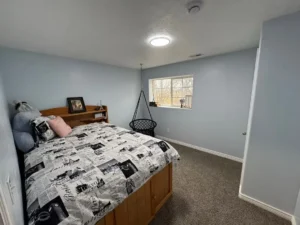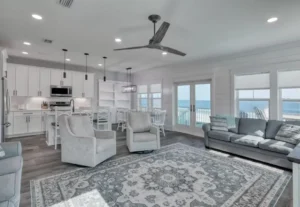

Quick answer: Finishing a basement in Park City typically costs about $45 to $110+ per square foot in 2026, and most Park City projects land in the upper half of that range. A basic 1,000 sq ft finish often starts around $45,000–$65,000, while a lower level with a bathroom, wet bar, egress windows and higher-end finishes commonly reaches $85,000–$110,000 or more. Bathrooms, egress windows, ceiling height fixes and mountain logistics are the biggest swing factors.
What is the average cost to finish a basement in Park City?
Across Utah, published 2026 pricing for basement finishing runs from roughly $40 to more than $100 per square foot. Park City sits toward the top of that spread for three practical reasons: crews travel up Parleys Canyon or over from the Heber Valley, materials have to be delivered and staged on steep, snowy lots, and owners here usually expect a finish level that matches a mountain home rather than a basic rec room.
Use these tiers as a starting point for planning, not a quote:
| Finish level | Typical cost per sq ft | What it usually includes |
|---|---|---|
| Basic finish | $45–$65 | Framing, insulation, drywall, carpet or LVP, standard lighting, one open family room and a bedroom |
| Upgraded finish | $60–$85 | Full bathroom, better flooring, recessed lighting zones, built-in storage, a ski or gear room |
| Mountain-home finish | $75–$110+ | Wet bar or kitchenette, steam shower or heated floors, theater room, wine storage, custom millwork |
Your actual number comes from an itemized estimate after someone has walked the space, checked the foundation and confirmed which jurisdiction will permit the work. You can see how we run that walkthrough on our process page.
Why does finishing a basement cost more in Park City than in Salt Lake?
The same 1,000 square feet costs more at 7,000 feet than it does in Sandy or West Jordan. The difference is rarely one big line item. It is a collection of mountain-specific factors that add up:
- Travel and labor availability. Many trades live on the Wasatch Front or in the Heber Valley. Drive time, winter road delays and a tighter local labor pool all show up in the price.
- Snow-ready egress. Egress window wells in Park City sit under roofs that shed heavy snow. Deeper wells, better drainage and openable covers cost more than a basic galvanized well in the valley. We break this down in our guide to egress windows and window wells in Park City.
- Site logistics. Steep driveways, limited parking and snow storage rules affect where a dumpster and material deliveries can go. Inside Park City limits, the city also publishes restricted work dates around peak periods, which can shape the schedule.
- Finish expectations. Ski rooms with boot dryers, bunk rooms built for a full ski week, and après-ski bars are standard requests here, and they cost more than an open carpeted room.
- Older structures. Old Town homes and many 1980s–1990s houses in Park Meadows and Thaynes Canyon can need structural, plumbing or electrical updates before finishing can start.
Which line items move a Park City basement budget the most?
When owners are surprised by an estimate, it is almost always one of these items. Knowing them early lets you decide where to spend and where to save.
1. Bathrooms
A basement bathroom is often the single most expensive room per square foot because it needs plumbing below the slab. If your home already has rough-in drains, you save a significant amount of concrete cutting. If the drains sit below the sewer line, you may also need an ejector pump. See what goes into a lower-level bath on our basement bathrooms page.
2. Egress windows
Any basement bedroom, including a bunk room, needs a code-compliant emergency escape opening. Adding one where none exists means cutting the foundation wall, excavating, installing a window well and finishing the exterior. In parts of Park City, excavation can also trigger the city’s soil ordinance for historic mill tailings.
3. Wet bars and kitchenettes
A simple bar sink with base cabinets is a modest add. A full kitchenette with an under-counter fridge, dishwasher and range circuit is a much bigger one. Our basement kitchens and wet bars page walks through the options.
4. Ceiling height and mechanical reroutes
Ducts, beams and drain lines that hang low can force soffits or reroutes. Moving a trunk line or relocating a furnace or boiler adds cost, but it can make a cramped basement feel like the rest of the house.
5. Radon and moisture prep
Testing for radon is inexpensive, and roughing in a mitigation pipe before the walls close is far cheaper than retrofitting it later. The same goes for fixing grading and gutters before framing. Our radon and moisture checklist for Park City basements covers what to check first.
How can I keep a Park City basement finish on budget?
- Use existing plumbing locations. Placing the bathroom and bar near the main drain stack saves concrete work.
- Prioritize the rooms you use in winter. A great ski room and one solid bathroom near the garage entry will get more use than a second theater.
- Phase the luxury items. Rough in for a future wine room or steam shower now, then finish it in a later season.
- Book the shoulder season. Planning in summer and building through fall or spring mud season keeps crews off icy roads and away from peak-week restrictions.
- Get an itemized estimate. A single lump-sum price hides where the money goes. Ask for line items so you can make trade-offs.
Does a finished basement add value to a Park City home?
Usually, yes. In a resort market, usable sleeping space and a functional ski room are features buyers and renters notice right away. A finished lower level with legal bedrooms can change how a home is marketed, and a separate-entry suite may open the door to a long-term rental or family suite where zoning allows. Short-term rental rules are a separate question in Park City and vary by neighborhood, so check them before designing around rental income. If a lock-off is on your list, read our ADU and addition page.
Finishing vs. remodeling: which cost guide applies to you?
This guide covers basement finishing, which means turning unfinished concrete into living space. If your lower level is already finished but dated, the math changes: you pay for demolition, but you may save on framing and mechanical work. Read our guide to remodeling an older finished basement in Park City for that scenario.
Frequently asked questions
How much does it cost to finish a 1,000 square foot basement in Park City?
Plan on roughly $45,000 to $65,000 for a basic finish and $85,000 to $110,000 or more for a mountain-home finish with a bathroom, bar and upgraded materials. Egress windows and structural work are added on top when needed.
Is a basement bathroom worth the cost in Park City?
For most Park City households, yes. Guests in bunk rooms and skiers coming in from the garage use it constantly, and it keeps wet boots and traffic off the main floor.
Do I need a permit to finish a basement in Park City?
Yes. Finishing a basement involves framing, electrical, plumbing and mechanical work that requires a building permit. Homes inside city limits go through the Park City Building Department, while most homes in the Snyderville Basin go through Summit County. Our Park City basement permit guide explains the difference.
How long does it take to finish a basement in Park City?
Many basement finishes take about two to four months of construction after permits are issued. Bathrooms, egress windows, custom millwork and winter weather can extend that.
Can I finish my basement myself to save money?
Utah allows some owner-builder work on your own home, but permits and inspections still apply, and many owners hire licensed trades for electrical, plumbing and gas. Mistakes in egress, fire blocking or radon prep are expensive to fix after drywall.
Get a real number for your Park City basement
DreamBuilt Renovations finishes and remodels basements across Park City and greater Summit County, including the Snyderville Basin, Promontory and Silver Creek. Learn more about our Park City basement remodeling work, browse the project gallery, or request a consultation for an itemized estimate.